

You have 15 minutes to act on a local concern, but should you contact a council member, submit public comment, sign a petition, or wait for an election? The best choice depends on who controls the decision, what deadline applies, how much time you can commit, whether you are eligible, and how publicly you want to participate.
Which form of civic participation best matches your goal, time, and desired visibility?
The right form of civic participation matches the desired outcome with the government body that controls it. Procedures differ across federal, state, county, municipal, school-district, and special-district jurisdictions, so verify the channel with the responsible entity before acting.
- Select officeholders or decide a ballot question: Confirm eligibility and registration, then vote through the relevant election office.
- Influence a pending decision: Submit public comment, testify at a meeting, or contact members of the responsible body before its deadline.
- Resolve a government-service problem: Request casework from an elected official or agency connected to the program.
- Build community capacity: Volunteer with a government program, nonprofit, neighborhood organization, or campaign.
- Seek an appointed role: Review the application, residency, experience, disclosure, and meeting requirements for a public board or commission.
Choose civic participation by identifying the actual decision-maker
A short email to a council member helps only if the council controls the issue. State legislatures, counties, municipalities, school districts, special districts, and federal agencies have different powers, and those divisions are not uniform nationwide.
- Authority risk: Find the official agency, legislative body, election office, clerk, or board responsible for the decision.
- Eligibility risk: Check the rule for the specific activity rather than assuming voter qualifications govern every channel. NUVotes reports that Chicago Local School Council elections and participatory budgeting in participating wards allow residents to participate under specific local rules.
- Privacy risk: Treat communication with government as potentially disclosable. The U.S. Election Assistance Commission explains that voter records are often governed by state public-record laws, with availability and confidentiality varying by state.
Choose civic participation by deciding whether your goal is immediate, electoral, or long-term
Use four planning bands: under 15 minutes for finding an agenda or sending an inquiry; one to two hours for preparing comment or attending a meeting; recurring monthly work for volunteering or organizing; and long-term service for a board appointment. Visibility can range from low-profile research to identity disclosed to an office or participation entered into a public record.
Immediate opportunities may close with a hearing deadline. Elections follow registration and voting calendars, while petitions and board applications have separate filing periods. Use the USAGov election-office directory when the issue involves voting.

Which form of civic participation best matches your goal, time, and desired visibility shown with practical context cues.
The main types of civic participation differ in access, effort, visibility, and influence
Common types of civic participation include voting, constituent contact, public comment, meeting attendance, volunteering, petitioning, election work, organizational membership, and board service. Each option works differently and cannot guarantee that a public body will adopt a participant’s preferred outcome.
What are practical civic participation examples for limited time?
- Voting: Use it to choose candidates or decide an official ballot question. Eligibility, registration, identification, and voting procedures depend on the jurisdiction.
- Constituent contact: A focused email or call can state a position, request casework, or ask how an official plans to act. The communication may become a public record.
- Written comment: Use it during a pending rule, budget, plan, or hearing. Follow the agency’s deadline and required fields.
- Meeting attendance: Observation requires less preparation than testimony. Speaking may require registration and usually creates greater visibility.
Official notices should identify available disability accommodations, language assistance, and request deadlines. Civic participation can also begin with service feedback and relationship-building, as shown by NYC Votes’ community examples.
What types of civic participation require a recurring commitment?
- Volunteering: Government programs may require screening or training. Nonprofit, community, union, and campaign organizations set their own requirements.
- Petitioning: A government petition requests official action. A ballot-qualification petition must satisfy election law. A private advocacy petition demonstrates support but does not itself compel government action.
- Boards and organizations: Advisory-board service may involve appointment, residency rules, ethics disclosures, fixed terms, and recurring public meetings.
- Election work: Poll-worker positions commonly require training and may have age, residency, registration, or party-balance conditions. Youth programs exist, but applicants must verify local rules.
Voting chooses representatives or decides ballot questions, while other civic participation addresses decisions between elections
Voting formally records an eligible voter’s choice among candidates or ballot questions. Public comment, constituent contact, meetings, and lawful organizing address government activity between elections.
Use voting when the choice appears on an official ballot
If a candidate or question appears on an official ballot, voting is the channel that directly records the voter’s choice. A ballot measure produces an electoral decision after completing the applicable qualification process, while an ordinary petition requests action and public comment supplies information or an opinion during a proceeding. Read more about how ballot measures can produce policy changes.
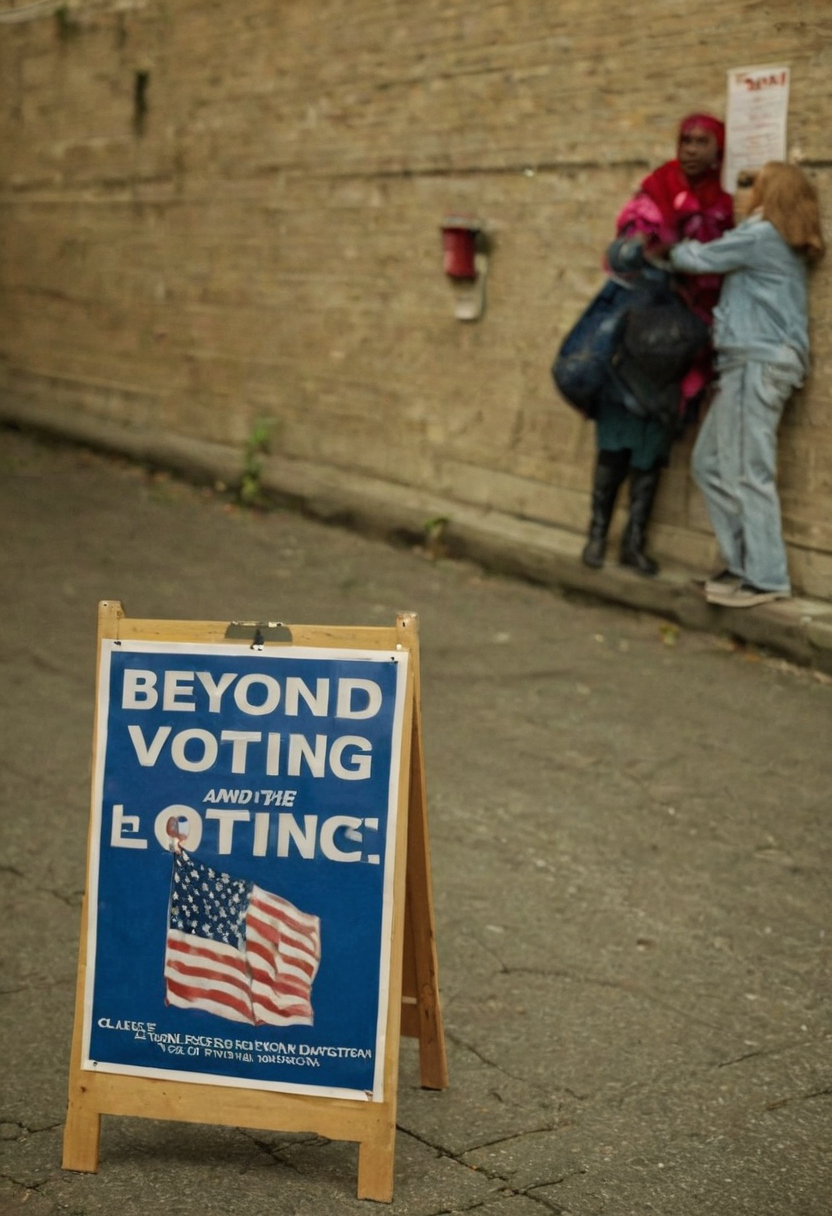
Voting chooses representatives or decides ballot questions, while other civic participation addresses decisions between elections shown with practical context cues.
Before voting, use the USAGov state and local election-office directory to find the authority responsible for registration, voting methods, polling information, and results. Verify procedures near the election because rules vary and can change.
Use public comment or constituent contact when an authorized body is considering the issue
Match the concern to the government action underway:
- Pending proposal: Submit comment under the notice issued for a rulemaking, zoning hearing, budget session, or public meeting.
- Personal service problem: Ask the appropriate constituent-services office for help navigating an agency, without assuming that the office can compel a particular result.
- Broader policy request: Contact officials with authority over the subject or organize with others when no hearing or election is scheduled.
The official notice controls the deadline, submission format, speaking limit, and treatment of written materials. Confirm those details before preparing a request.
How do you verify and complete a civic participation process?
A reliable process starts with an official government source rather than a social post or unofficial deadline summary. Identify the responsible body, find its current instructions, confirm participation rules, prepare a concise contribution, and retain proof when available.
Find the official civic participation channel before preparing your submission
Use an election office for election procedures, an agency portal for regulatory comments, a legislative website for hearings, a municipal clerk for council business, or an official board page for vacancies. Agendas and notices often contain the controlling instructions.
An official page should identify the administering office, current proceeding, contact information, and submission channel. Confirm that the page covers the correct jurisdiction. A third-party petition or advocacy platform may collect support without completing an official government filing.

How do you verify and complete a civic participation process shown with practical context cues.
Follow the civic participation format, deadline, and recordkeeping rules
- Confirm the responsible government body and current notice.
- Check eligibility, residency, registration, or signature requirements.
- Record the deadline, time zone, filing window, and accommodation-request date.
- Verify word limits, accepted files, required addresses, and speaker-registration rules.
- Submit through the named portal, email address, clerk’s office, or hearing process.
- Save a receipt, confirmation screen, sent email, or timestamped copy.
- Check the agenda, docket, minutes, or application status for follow-up.
Late, duplicate, anonymous, threatening, or off-topic submissions may receive different treatment under applicable rules. Written comments, remote testimony, petitions, and board applications can have separate procedures within the same jurisdiction.
Make civic participation concise, relevant, and verifiable
A neutral submission can use this format: “I am writing about [issue or agenda item]. I request [specific action]. This matters because [local or personal relevance]. Supporting information includes [source, record, or experience]. My contact information is [details, if required].”
Separate documented facts from personal experience and avoid unnecessary sensitive information. An individualized comment can explain local effects, identify a record, or correct a factual misunderstanding.
Eligibility, accessibility, privacy, and conduct rules can limit civic participation options
Many civic activities are open more broadly than voting, but access is not uniform. Citizenship, age, residency, registration, appointment qualifications, privacy rules, and local procedures may affect the available channel.
Who can participate in civic activities without being eligible to vote?
Voting qualifications do not automatically govern other participation methods. Northwestern University’s NUVotes identifies advocacy, public meetings, petitions, campaign support, and contacting officials as possible activities for noncitizens or people otherwise ineligible for federal elections, subject to applicable law.
- Meetings and comments: Attendance may be broadly available, but speaker and submission rules can apply.
- Constituent contact: People may send policy messages, although casework assistance may require district residency.
- Volunteering: Government, nonprofit, community, and campaign roles have separate qualifications.
- Board service: Residency, age, expertise, appointment, ethics, or affiliation requirements may apply.
When does civic participation become part of a public record?
Official emails, written comments, recorded testimony, petition records, and board applications may be retained or disclosed under applicable public-record laws. The U.S. Election Assistance Commission explains that voter-file disclosure varies by state, while secret ballots do not reveal whom a person voted for. Ask the administering office about confidentiality before submitting sensitive information.
How can participants request disability access or language assistance?
Meeting notices and official participation pages should identify the accessibility or language-assistance contact. Request an interpreter, captioning, accessible format, mobility accommodation, or other assistance as early as possible because procedures and lead times vary.
Civic expression does not excuse threats, harassment, disruption, or trespass. Review the applicable conduct rules before participating.
A one-week civic participation plan can turn a broad concern into a lawful next step
A practical one-week plan converts a general concern into one verified action. If no election, hearing, comment period, or application window exists, sustained volunteering or organizational work may be the better match.
Use a civic participation checklist before taking action
- State the goal and the specific decision you want to address.
- Identify the responsible level of government.
- Check official notices for elections, hearings, deadlines, or vacancies.
- Choose a channel that fits your time, eligibility, accessibility needs, and desired visibility.
- Review the format, privacy notice, conduct rules, and accommodation process.
- Complete the action and preserve any confirmation or correspondence.
- Recheck official rules before acting and schedule appropriate follow-up.
Success begins with reaching the correct office and completing a valid process, not with guaranteeing agreement or a response. The practical change is simple: identify the decision-maker first, then choose the civic participation method.
Frequently asked questions about civic participation
Civic participation covers lawful ways people contribute to public decisions and community life. The correct method depends on the activity and the rules of the responsible jurisdiction.

Frequently asked questions about civic participation shown with practical context cues.
What is civic participation, and how is it different from political engagement?
Civic participation includes voting, public comment, community service, meeting attendance, petitioning, election work, and board service. Political engagement usually refers more narrowly to efforts involving elections, candidates, parties, public policy, or government power.
What are examples of civic participation that take less than one hour?
Short activities include locating an agenda, contacting an official, checking an election deadline, submitting a brief comment, completing an official survey, or registering for a meeting. Preparation and submission time depend on the process.
Can someone participate in public meetings or contact officials if they are not eligible to vote?
Often yes, but eligibility rules vary by activity and jurisdiction. A person should check the meeting notice, agency instructions, campaign rules, or other official guidance before participating.
Are public comments, emails to elected officials, and petition signatures public records?
They may be retained or disclosed under applicable public-record laws. Disclosure rules differ by jurisdiction and record type, so participants should avoid unnecessary sensitive information and review the official privacy notice.
Which type of civic participation is appropriate when no election or public hearing is scheduled?
Contact the official or agency with authority over the issue, request constituent assistance when appropriate, join a relevant civic organization, volunteer, or monitor official notices for a future proceeding. Choose the option that matches the desired outcome and available time.